Problem
During support and audits, discovering hardware, software, ownership, risks, certificates and history required checking multiple sources or relying on operational memory.
DISTRIBUTED SYSTEMS · WINDOWS · IT OPERATIONS
INTERNAL USEContinuous inventory, Windows agent and contextual service desk
I co-developed an internal system that keeps inventory, technical health, ownership and tickets attached to the right workstation, reducing manual checks during support, maintenance and audits.
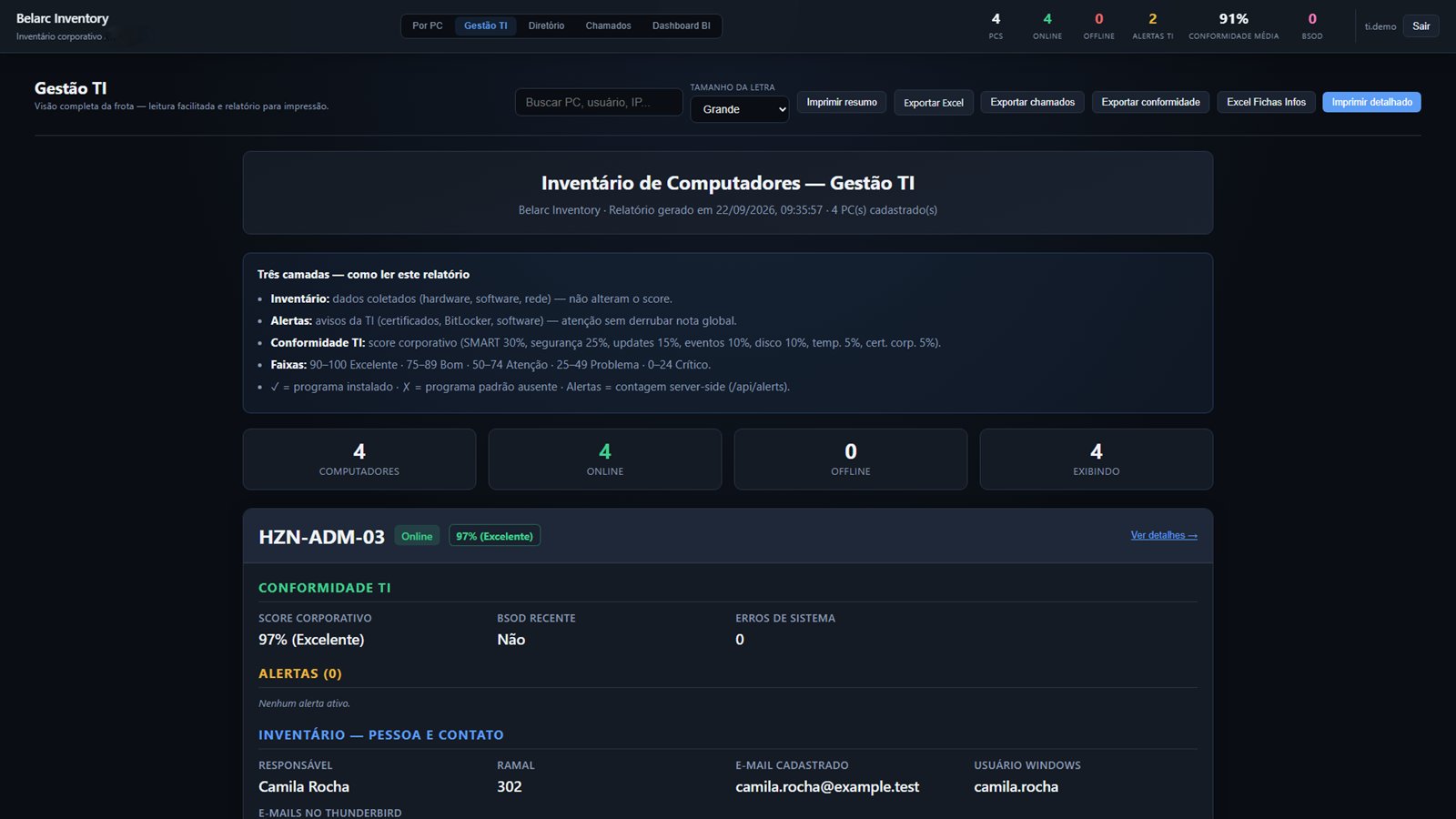
SYSTEM SCREENS
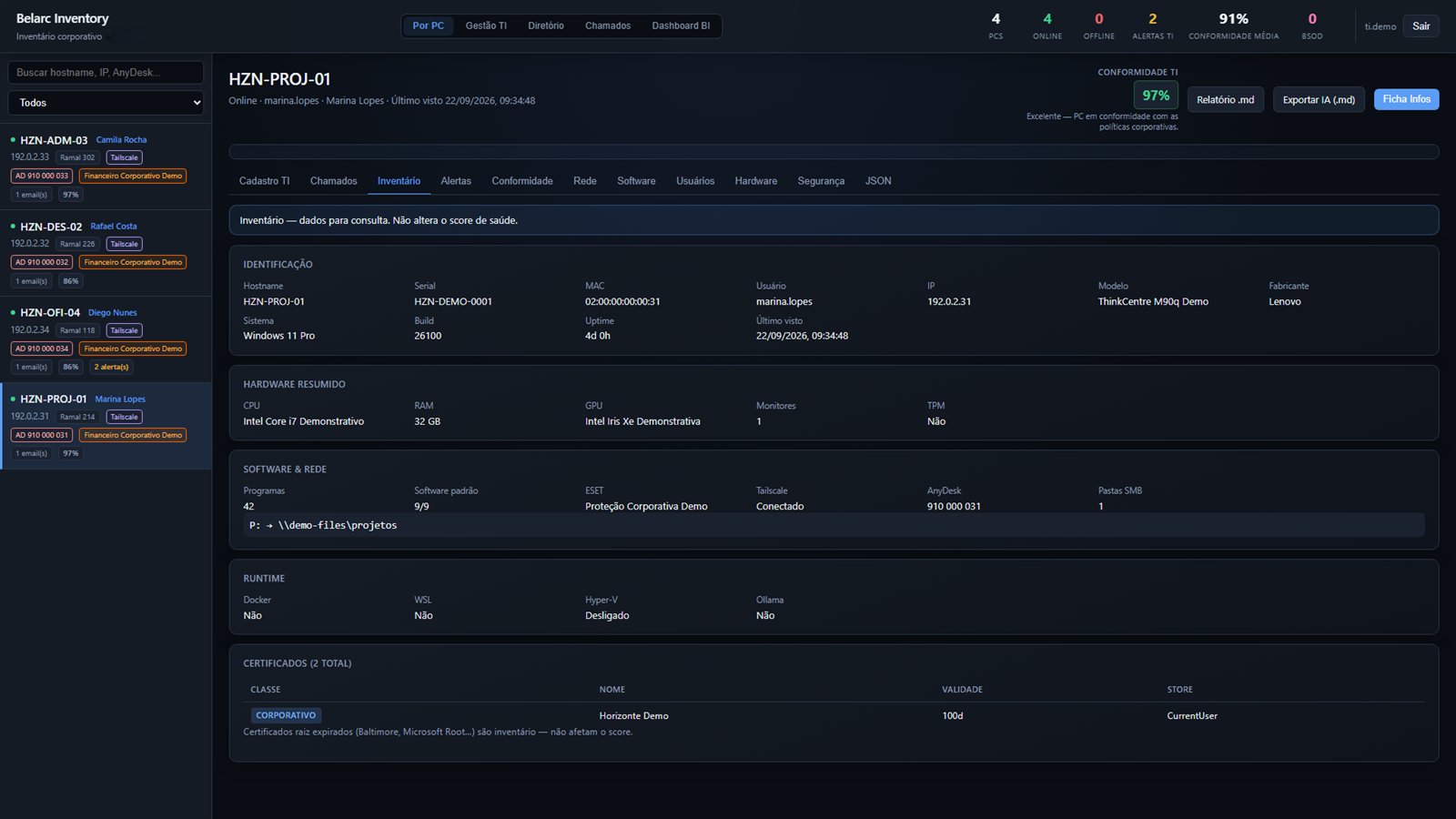
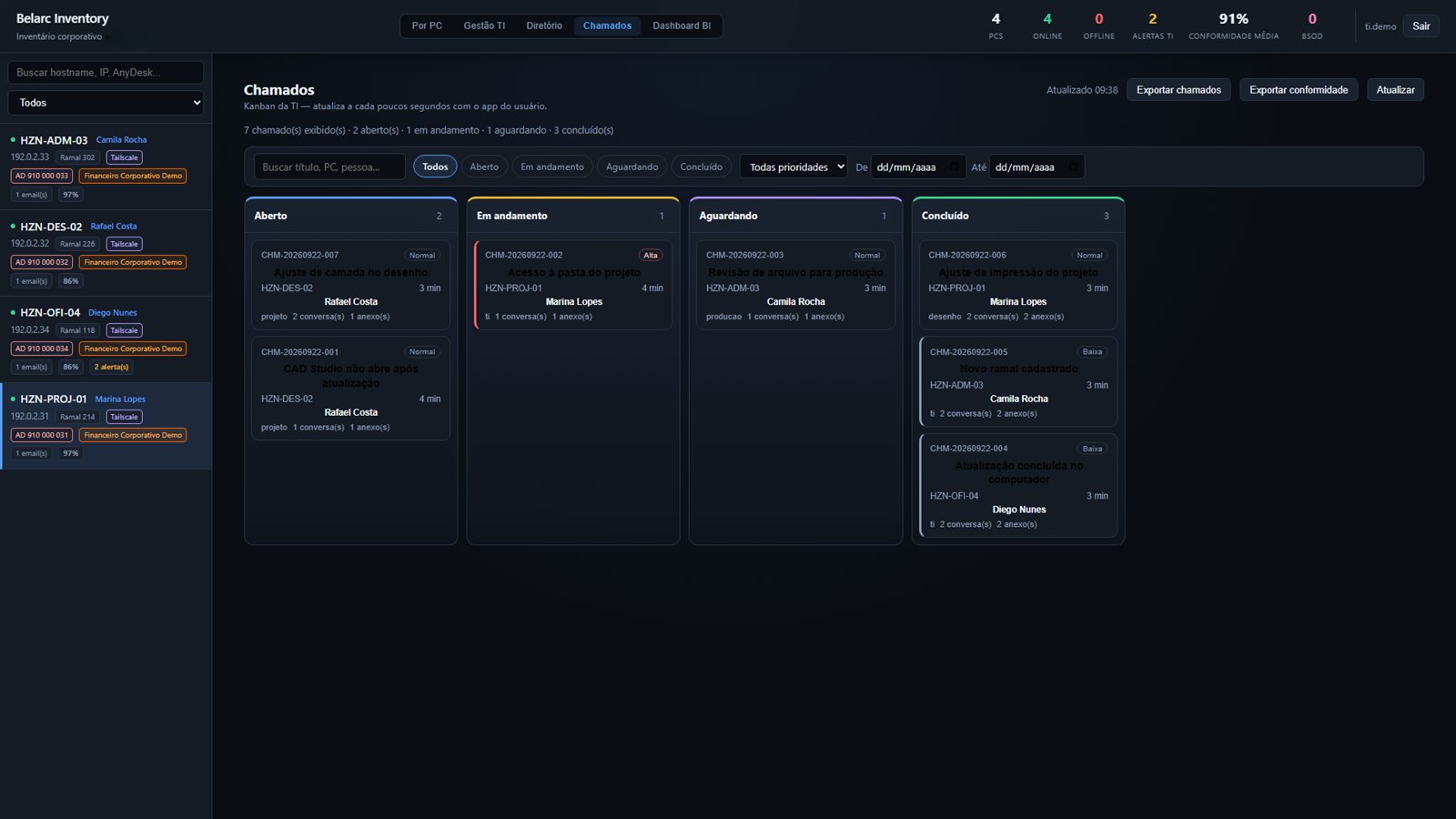
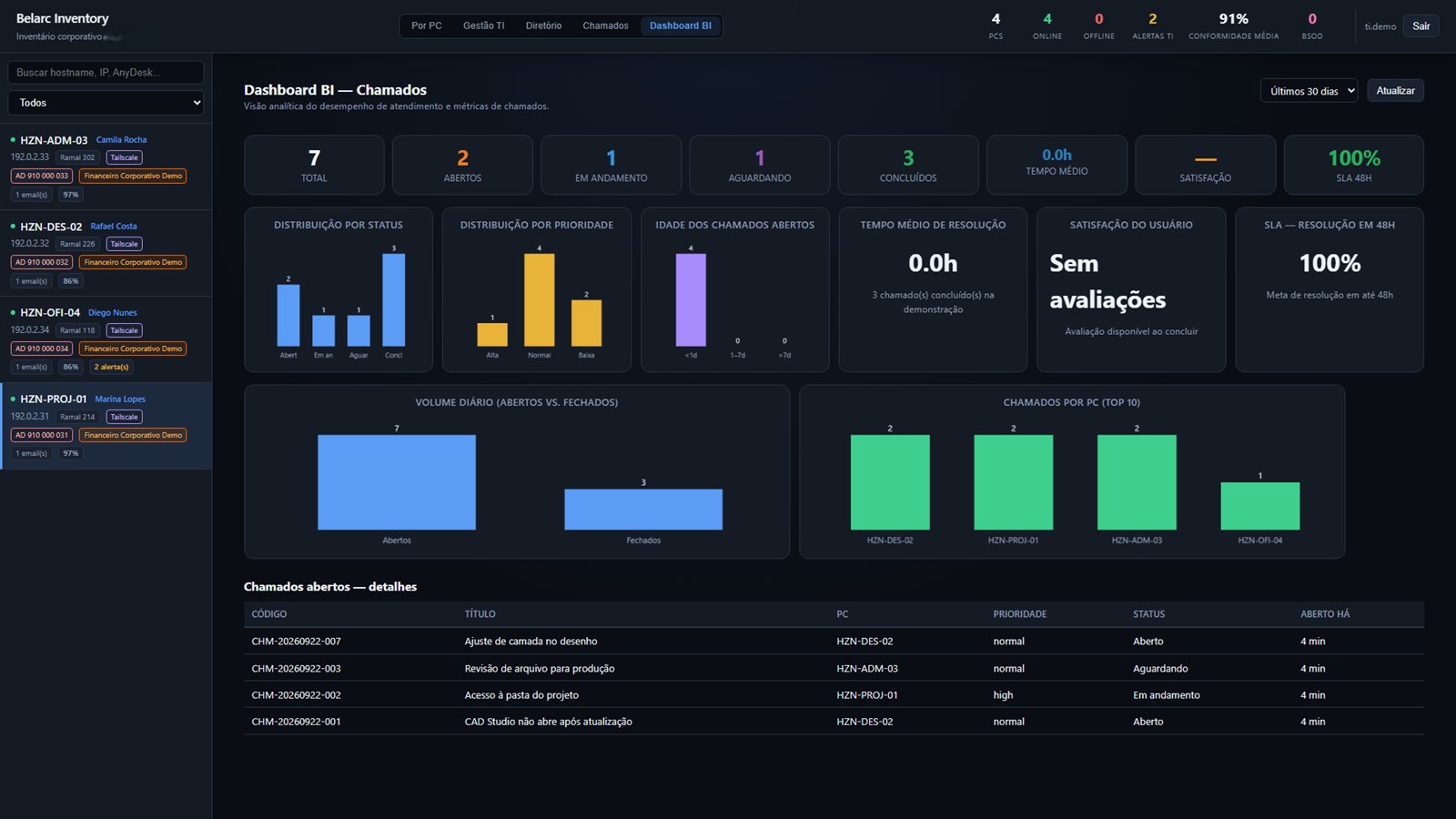
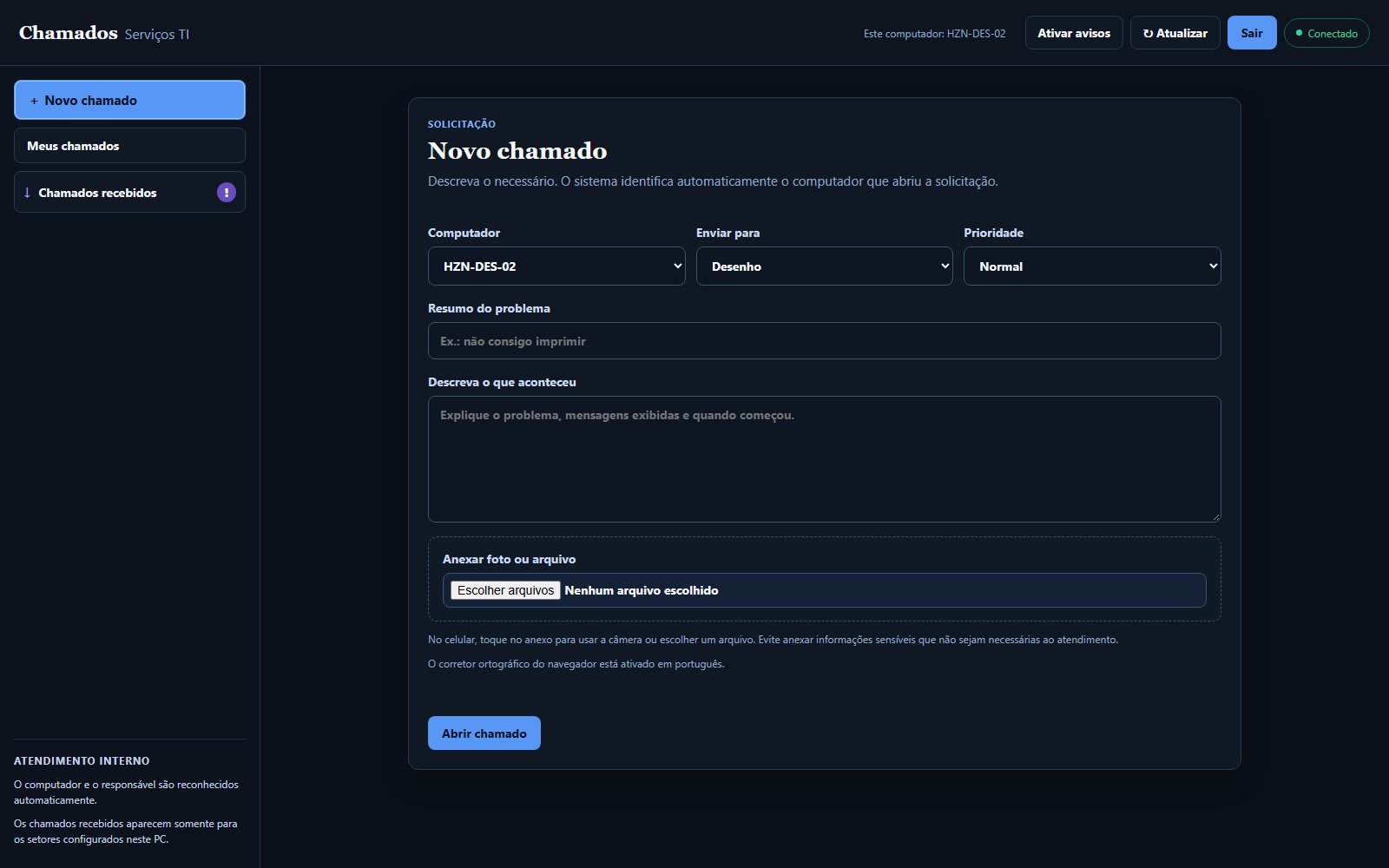
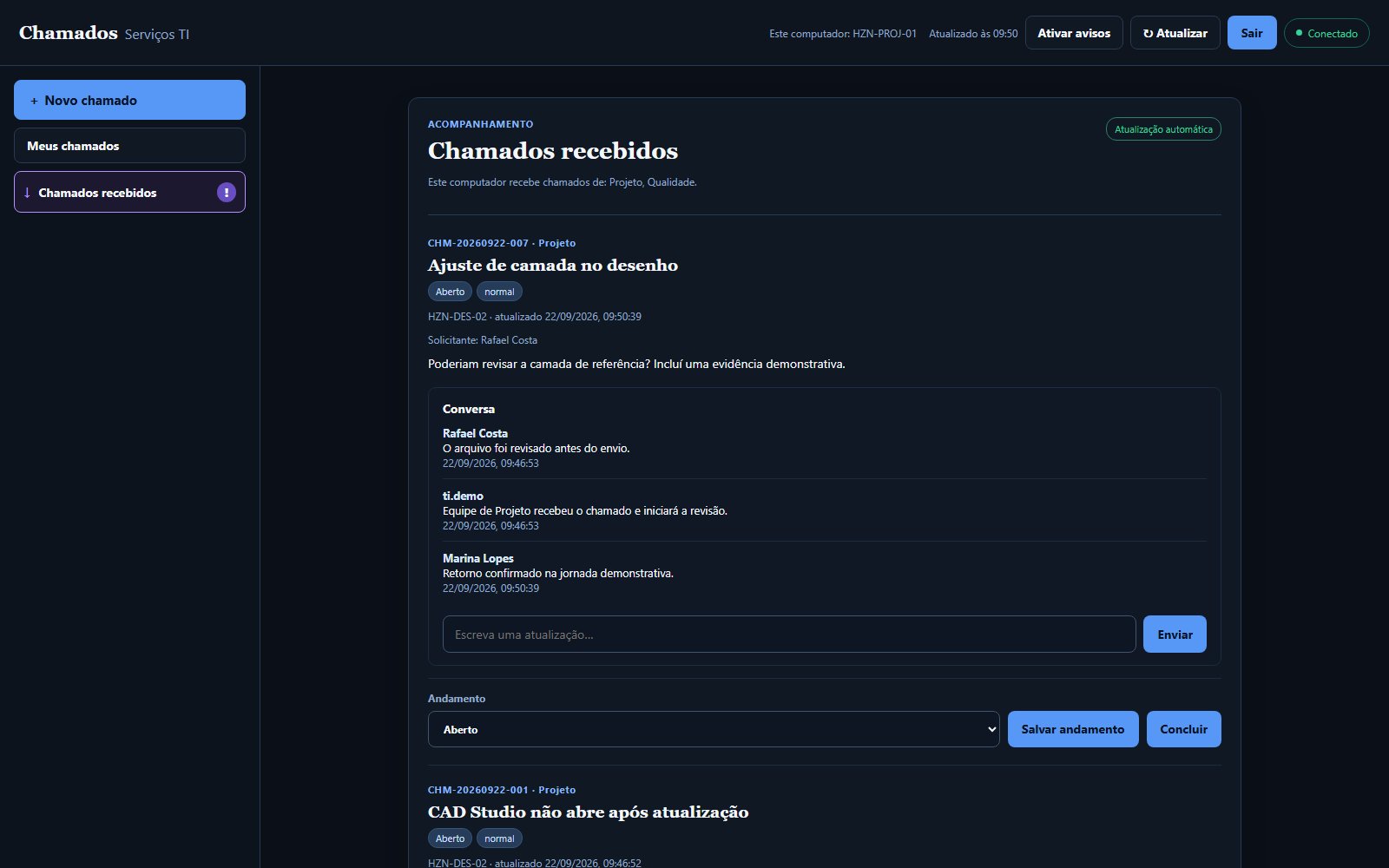
Real use
The system is running at my current company; public material replaces names, addresses and internal data with fictitious scenarios.
Not an AI agent
The “agent” is a Rust Windows service that collects and synchronizes data. The project is not presented as an LLM or RAG agent.
During support and audits, discovering hardware, software, ownership, risks, certificates and history required checking multiple sources or relying on operational memory.
The Rust agent runs PowerShell/CIM collectors, maintains a local cache and sends changes to the Axum/SQLite server over internal HTTP with an agent token. IT, requesters and departments receive different interfaces by role.
The agent uses store-and-forward when the server is unavailable, temporary enrollment for new agents and a LAN/VPN-only model that keeps inventory away from the public internet.
Intentional boundary
The server is designed for private LAN/VPN use. Real tokens, databases, logs, attachments and collected company data are not published.
Public quality
The repository includes an isolated smoke test, cargo fmt, clippy, cargo test and a public-tree validation gate.
This case presents a sanitized public version of the real system, with fictitious data and without credentials, internal addresses or corporate inventory.